Around Bridgewater, what a house smells like on the first cold night of fall depends on the machine making the heat. In Bridgewater itself, by Census Bureau estimates, utility gas heats more than eight homes in ten, so the first smell of the season most often comes from a gas furnace. Bedminster is different. The township says PSE&G's gas mains stop short of some properties, and by the same Census estimates only about six households in ten there use utility gas, roughly one in four heats with electricity, and several hundred burn fuel oil, with propane in some of the rest. Each of those systems smells different on its first day, and each smell points to a different part of the house.
Which smell is normal the first time the heat runs?
A dusty, slightly scorched smell in the first minutes of the season is usually dust. All summer it settles on the furnace's heat exchanger and burners, or on the electric elements of a heat pump's backup heat or an electric furnace, and the first real heat cooks it off. It should fade over the first few cycles. Two habits shrink it: put in a fresh filter before the first cold night, and run the heat once on a mild afternoon with a window open, so the burn-off happens while you can air the house out instead of at two in the morning in November.
When does a burning smell point to the ducts?
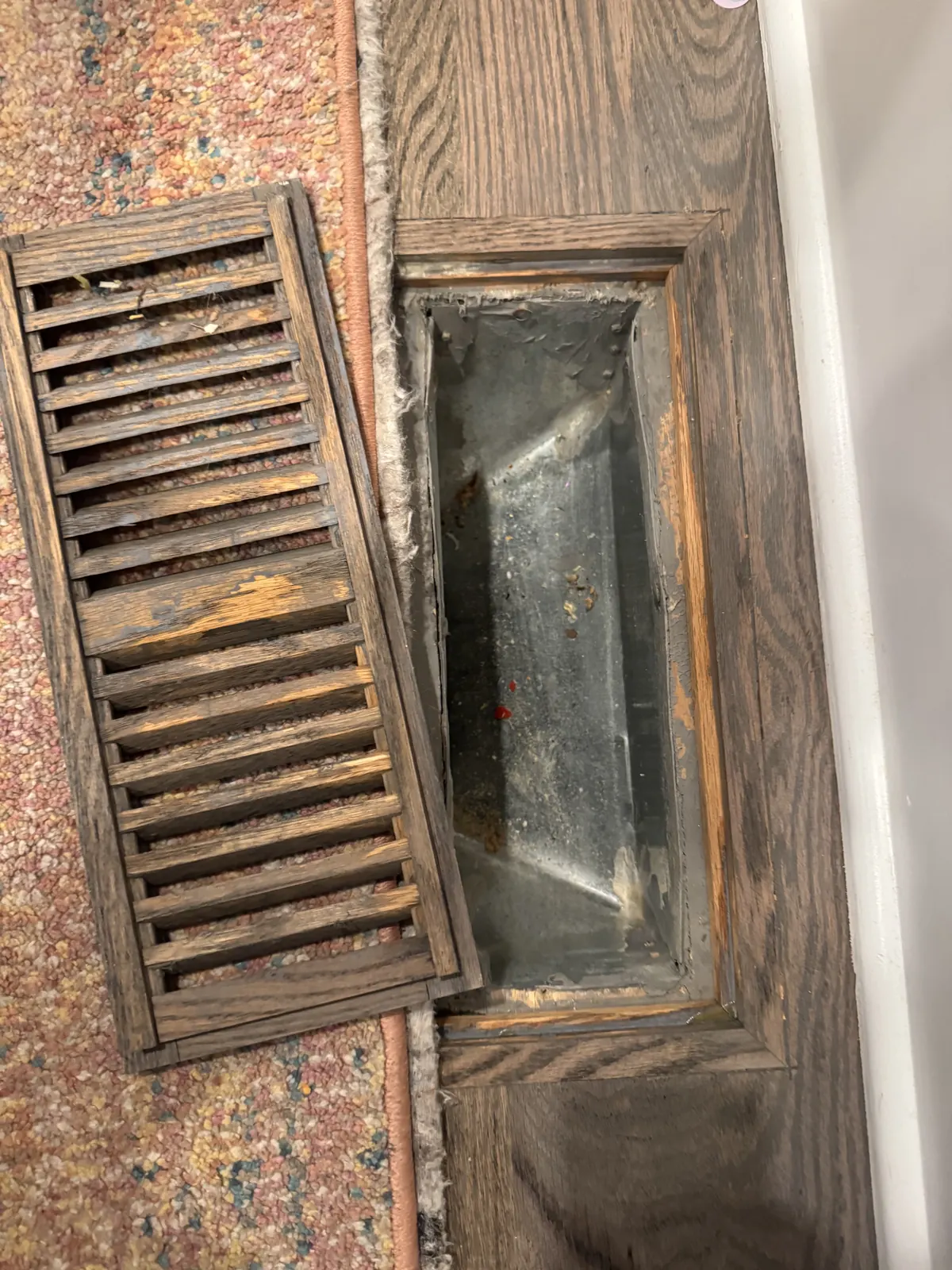
When it comes back cycle after cycle, or arrives with a puff of dust from the registers, the heat is no longer burning off one summer's film; something keeps feeding it. The usual places are on the return side: a filter that has collapsed or was never put in, a filter rack with a gap around it, a blower caked with dust, or a return that draws straight from a dusty basement or workshop. Pull the filter and shine a flashlight into the return duct behind it. The EPA lists ducts clogged with excessive dust and debris, and particles released into the home from the supply registers, among the reasons to consider having ducts cleaned. That is what air duct cleaning is for. The crew works the returns, the supply runs and the plenums, opens and checks the blower compartment, and keeps the whole system under negative air, which pulls the loosened dust out of the house instead of around it.
What does a musty smell at the first heat mean?
In most houses with central air, the cooling coil sits on top of the furnace or inside the air handler, over a drain pan that stayed wet all summer. The first heat pushes warm air across that coil and pan, and if anything grew there, every room gets a share of the smell. Duct lining or insulation that took on moisture in a damp basement can do the same. If the musty note outlasts the first day, have the coil, the pan and the plenum inspected. Mold treatment and removal takes in the coil, the pan, the plenum and the runs they supply, and anything growing on walls or framing is a job for a remediation contractor. The moisture behind the growth gets fixed first, because the EPA's own guidance is that mold comes back when the conditions that caused it are not corrected.
Oil heat: which smells belong to the burner company?
An oil burner can give off a faint whiff of oil as it lights, especially on the first start of the season. A smell that lingers, soot around the burner door or on the wall above a register, or a burner that lights with a rumble is a different matter, and it goes to the company that services the burner before the heat runs much longer. The flue and the chimney get looked at in the same round, because a sooted or blocked flue changes how the burner draws. In Bedminster, where oil heat is more common than in Bridgewater, this is the step to book first. The EPA's advice for any fuel-burning furnace, stove or fireplace is an inspection and service before each heating season.
Heat pumps and electric heat: what is different?
Roughly one Bedminster household in four heats with electricity, which can mean a heat pump, electric baseboard or an electric furnace. A heat pump carries backup heat, electric elements that switch on in a cold snap or when the thermostat is turned up a long way, and the first time they run after months off, the dust on them burns away the same way it does in a furnace. Once is normal. A sharp electrical smell, hot plastic, or a burning smell that will not fade is a reason to switch the system off at the thermostat and call the heating contractor. And because a heat pump heats and cools through the same indoor coil, a coil or drain pan that grew something over the summer can carry a musty smell straight into winter.
Rotten eggs, and the gas you cannot smell at all
Natural gas has no smell of its own. An odorant called mercaptan is added before the gas reaches your meter, so a leak smells of rotten eggs or sulfur, and PSE&G's instructions are blunt: leave the building at once, move at least 350 feet away, and call PSE&G or 911 from there. Do not work light switches, use a phone inside, or go looking for the source. A house on propane gets the same treatment, with the call to the propane supplier made from a safe distance.
Carbon monoxide is the opposite problem. The Consumer Product Safety Commission describes it as colorless and odorless, so your nose will not warn you. The CPSC advises a yearly inspection and service of the heating system, with the chimney and flues checked for blockages, rust and loose or separated connections. It also advises alarms on every floor and outside the sleeping areas, running on batteries or backed up by them. If an alarm sounds, get everyone outside before anything else, then phone 911 or the fire department.
A first-heat routine for the week before the cold
Put in a fresh filter that sits in its rack without gaps, clear the boxes and laundry that have piled up around the furnace or air handler, and vacuum the return grilles. Test the carbon monoxide alarms while you are at it. Book the service on fuel-burning equipment before the season rather than after the first cold morning without heat, then run the heat once on a mild afternoon with the windows cracked and note what you smell, and for how long.
A dusty smell that fades is the season starting. A smell that stays, dust at the registers, or a musty note that follows the blower into every room deserves a look before the house is shut up for winter. In Bridgewater and Bedminster alike, that look starts at the return: air duct cleaning when the smell is dust, and an inspection of the coil and drain pan when it is musty.