Around Bridgewater, water gets into basements three ways. The Raritan and its North Branch rise and spread: in September 2021, during Ida, the North Branch crested at 19.52 feet on Bridgewater's western border, a little above its record from Hurricane Floyd. Flash floods come fast off higher ground, and North Plainfield's Office of Emergency Management warns residents that the borough sits below the Watchungs, in the path of storm water running down from higher towns. Sewer backups rise through floor drains, as they did on the east end of Bound Brook during Ida. All three reach the air system at its lowest points, and each leaves a different mix of cleaning, air duct repair and replacement behind.
River, flash flood or sewer backup: does it matter?
It does, mostly in how much has to come out. River water can rise over hours, sit in a basement for a day or more and leave silt behind as it drops. Flash flood water tends to come and go faster but carries mud and street debris with it. Water that backs up out of a floor drain or a sewer line carries sewage; during Ida, backflow through service pipes on Bound Brook's east end led to the evacuation of apartment complexes. The EPA notes that even rainwater flooding can mix with sewage and bring bacteria and chemicals into a home, so any floodwater is treated as dirty. Where contaminated water reached the ducts, anything porous goes without debate, and the metal that stays is cleaned first and sanitized second, since a disinfectant only works on a surface that has been cleaned.
Can ductwork that sat in floodwater be cleaned?
Some of it can. The dividing line is whether a material soaks up water. The EPA's flood cleanup fact sheet says materials that do not absorb water, such as metal, glass and hard plastic, can usually be cleaned and dried, while materials that soak up a lot of water should be thrown away, along with anything that cannot be thoroughly cleaned and dried within 24 to 48 hours. Bare sheet metal falls on the cleanable side. Duct insulation does not: the EPA's guidance on cleaning air ducts says that if insulated air ducts get wet or moldy, the insulation cannot be effectively cleaned and should be removed and replaced.
That sorts a basement system into three groups. Bare galvanized trunk and round metal branches get opened, cleaned, dried and resealed. Anything wrapped in fiberglass, lined with insulation inside, or built from fiberglass duct board comes out. Flexible duct goes too, because the insulation between its inner core and outer jacket holds water and silt where no brush can reach. What comes out is rebuilt as air duct installation work.
Which parts of a basement system take the water first?
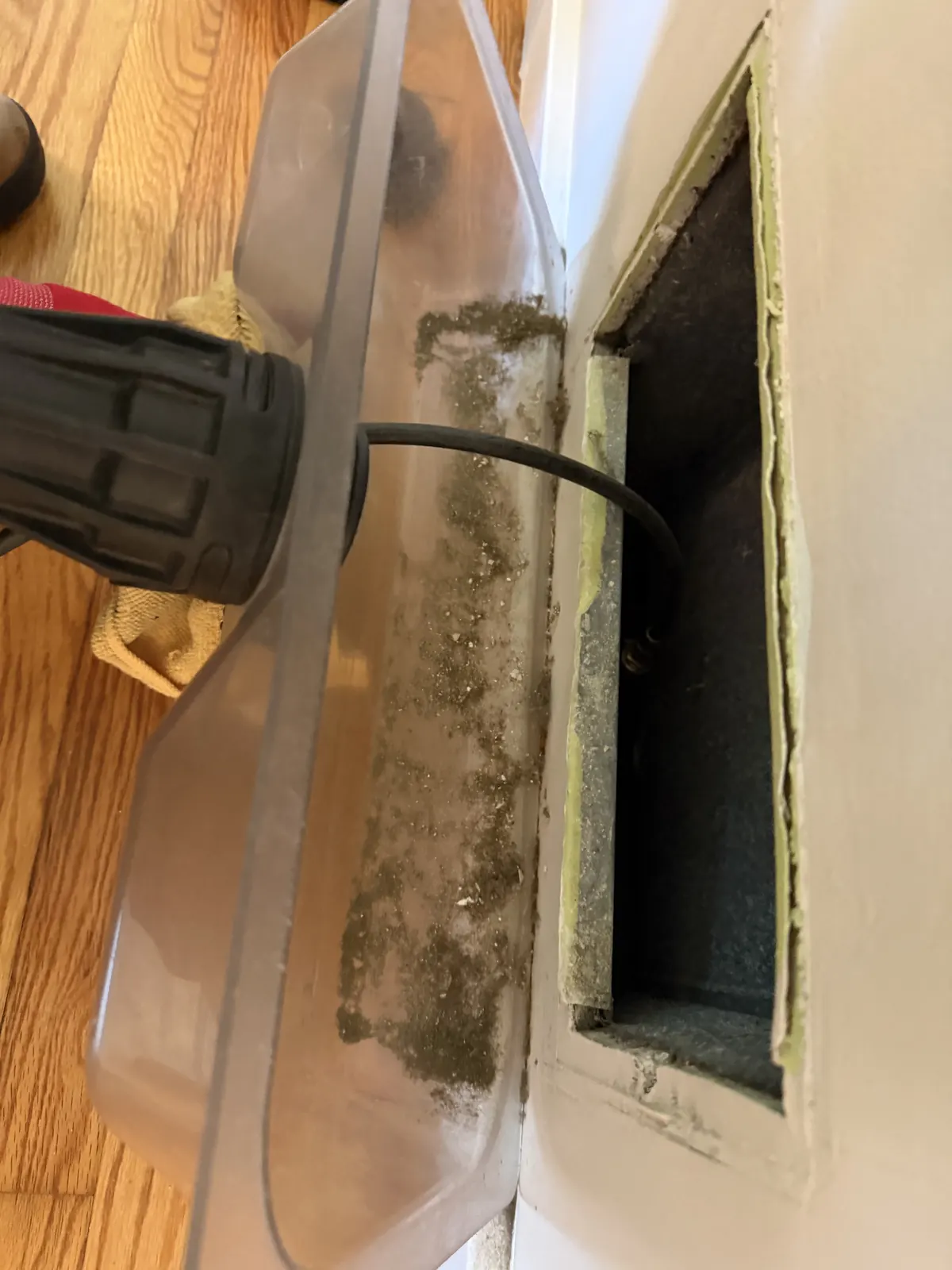
The lowest points go first, usually the return side and the equipment: a return drop ending in a filter rack near the floor, the bottom of the furnace or air handler cabinet where the blower sits, and floor registers in a finished lower level. Supply trunks hang higher, tight to the joists, and may stay dry unless the water climbed close to the ceiling.
Dryer vents are the other low point. The same North Plainfield office lists dryer vents among the water entry points residents should check, along with basement windows, doors and stairwells. A vent that exits a foot above the ground can take water back in through the hood, fill the duct with silt and reach the dryer itself.
What has to happen before the system runs again?
Drying comes first, and the equipment comes before the ducts. When Ida flooded parts of Middlesex, PSE&G shut off gas to the affected areas and restored it only after a municipal inspection, and gas appliances that had sat in floodwater were tagged and kept off until they were repaired or replaced. The air system follows the same logic. A blower running through a wet, silty return pushes whatever is inside into every room it serves, so the system stays off until the equipment has been cleared and the ducts have been opened, cleaned or replaced.
The EPA's fact sheet calls cleaning and drying air ducts complicated and urges caution with chemical biocides, including a check of the duct material and the product's directions before anything is sprayed into a ventilation system. We clean mechanically first and talk through any biocide with you before it goes in.
Where does mold treatment fit, and where does it stop?
Mold treatment and removal reaches as far as the air system goes: the plenums, the blower compartment, the coil, the drain pan and the ducts themselves. Drywall, framing and subfloors belong to a remediation contractor. The EPA puts the timing plainly: if the conditions that caused mold growth are not corrected, the growth comes back. The basement has to be dry, and stay dry, before treatment inside the ducts can last. HVAC UV light installation can keep a coil in a damp basement cleaner between visits, but the lamp is a layer on top of drying and filtration, never a substitute for either.
Replacement is a chance to fix the layout
Replacement runs do not have to go back the way they were. A return that started at floor level can move higher, a filter rack can be raised, and a dryer vent that left the house a foot above grade can move up the wall with a hood that closes, which is dryer vent installation work. None of that stops the next flood, but it keeps the next one from reaching the same parts.
Air duct repair covers what lies in between: joints of a saved trunk that separated when the water lifted and dropped it, hangers that rusted through, boots that pulled away from the floor. A trunk can survive a flood and still leak at every seam, pulling damp basement air into the system until those seams are closed.
What a post-flood visit looks like
We start with the water line on the basement walls and compare it with the lowest point of every run. The return drop and the plenum are opened, the blower compartment is checked for silt, and each section below the line is marked for cleaning or replacement. The dryer run is traced from the machine to the hood. Before anything is scheduled you get the split between air duct cleaning and repair or replacement, which also helps with an open insurance claim; the EPA suggests contacting the insurer and photographing the home before cleanup begins.
If your basement took water in Ida or in a storm since, and nobody has opened the lowest runs, start there: save the metal worth saving, replace the insulation that got wet, and do the work in the right order.