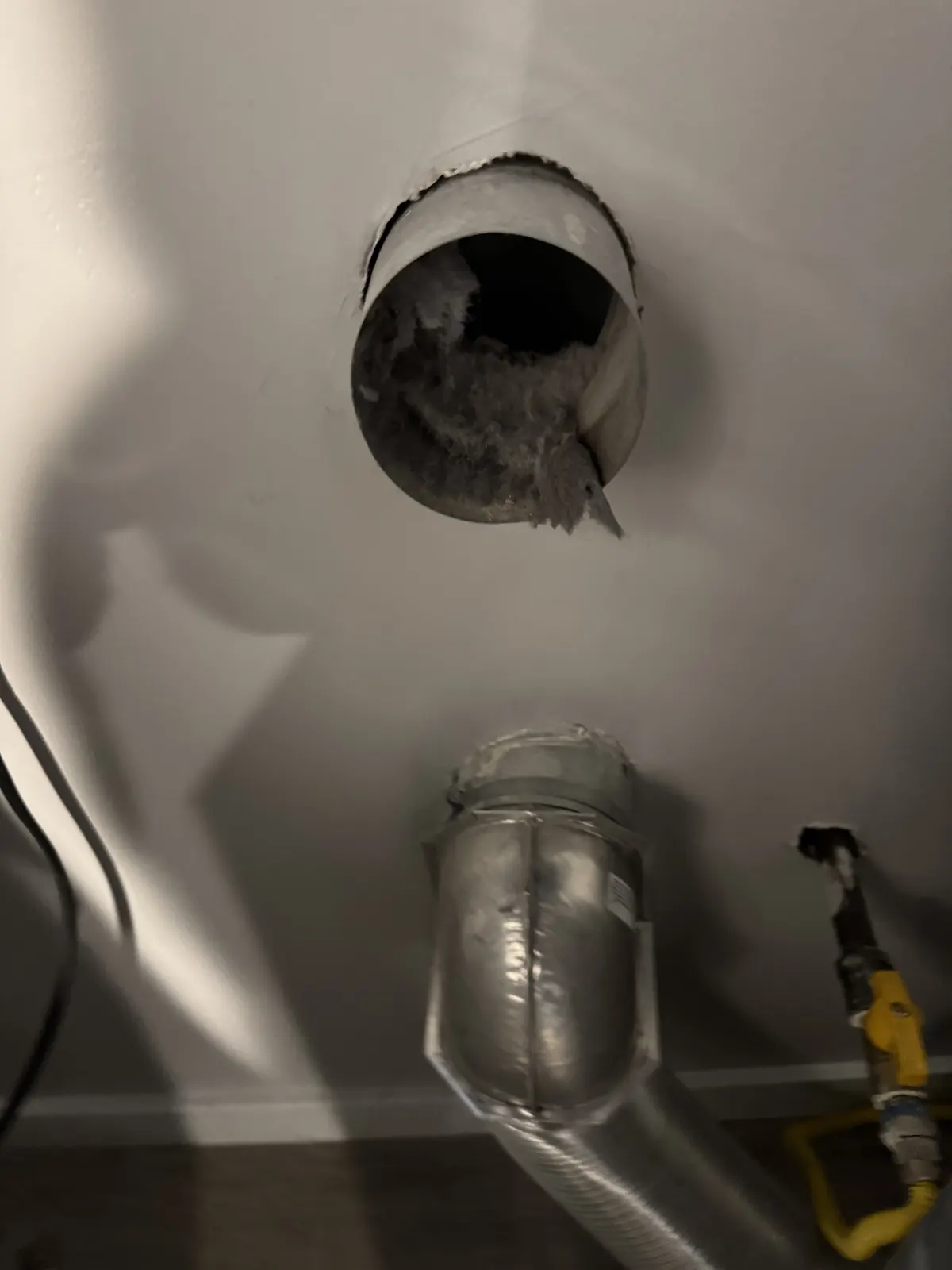
A dryer sharing a basement room with the furnace and the water heater is a common layout across older sections of Bridgewater and Middlesex. In that setup, lint that escapes the dryer vent run does not stay near the dryer. Air currents in the room carry it toward whatever is drawing air, and an older furnace or water heater that pulls its combustion air from the room is exactly that kind of draw. Lint settling on a burner compartment or an air filter meant to protect that burner is a sign the vent run is leaking somewhere between the dryer and the wall or roof termination.
Why older duct runs leak more
Houses built in Middlesex and Bridgewater during the postwar decades often still have original duct runs in place, since Census estimates date more than half of Middlesex's housing stock to the 1950s and 1960s. Decades of screws, clamps and old tape holding a joint together is a long stretch, and whatever sealed those joints has had plenty of time to dry out and crack. A run that age is more likely than a newer one to have worked loose at a seam, and a home with a dryer in a room this old sharing space with a furnace or water heater from the same era has two reasons to check: the vent is old, and the appliance pulling air from that room is likely just as old.
Where the leak usually starts
Three spots account for most of the lint found outside the duct. The flexible transition hose behind the dryer is the first, since it gets pulled, bent and reconnected every time the appliance is moved for cleaning, and a loose clamp there lets lint escape with every cycle. The first elbow past that connection is the second, where a sharp turn collects lint faster than a straight run and puts stress on the joint. Any joint fastened with sheet metal screws is the third, because the screws themselves give lint fibers something to catch on, and fibers caught at a seam are often the start of a gap that eventually lets exhaust air, and lint, through in volume.
Why an older furnace or water heater pulls it in
A furnace or water heater that draws combustion air from the room it sits in, rather than from a dedicated outdoor air intake, pulls room air toward the burner every time it fires. That same draw pulls in whatever is floating nearby, including dryer lint and ordinary dust. One water heater manufacturer asks owners to check the appliance's air filter monthly when it sits in a laundry room, because lint buildup on that filter restricts the air the burner needs to run correctly. A filter or burner compartment packed with lint is not a dryer vent problem on its own, but it is almost always a sign that lint is escaping the vent run somewhere nearby.
Tracing the leak
Working from the dryer outward finds the source. Pull the dryer away from the wall and check the transition hose for looseness at both ends, run a hand along the first few feet of duct for any give at the seams, and check the wall or floor penetration where the duct leaves the room for a gap that was never sealed. A flashlight run along the top of the duct, where lint tends to settle and show through a gap before it reaches the room air, often finds the leak before the furnace or water heater needs to be opened up at all.
What cleaning and resealing the run involves
Dryer Vent Cleaning clears the lint already built up inside the duct, from the transition hose through every elbow to the termination outside, which matters on its own since a restricted vent makes the dryer work harder and run hotter. Where a joint has worked loose or a clamp has given up, that gets resealed or replaced as part of the same visit. A run that has pulled apart at a seam, rather than just loosened, is Dryer Vent Installation work to rebuild with a route that holds. The test afterward is easy to run: watch each joint while the dryer completes a cycle and look for any lint pulled out at the seam.
Lint on the burner or filter is the appliance company's work
Clearing lint off the duct and its joints is the vent side of the job. Lint that has already settled on a burner, inside a water heater's air filter housing or anywhere inside the combustion chamber belongs to the appliance's service company rather than a duct crew, since opening a burner compartment means working with gas lines and ignition components outside the scope of vent work. The CPSC's guidance on carbon monoxide safety includes keeping the area around fuel burning appliances clear and having them checked, which lines up with the same idea here: a clean vent run and a clean appliance both matter, and each gets checked by the people who work on that part of the system.
Keeping the area clear between visits
Keeping behind the dryer clean and the surrounding area clear of clutter is basic dryer safety on its own, and it matters just as much in a shared furnace room. Boxes, laundry baskets and stored items pushed up against the furnace or water heater restrict the air both appliances pull from, the same air current that carries loose lint toward them. A few feet of open space around all three appliances, the dryer, the furnace and the water heater, cuts down on how much lint has anywhere close to the burners to land, even on a day when the vent run itself is clean.
What a visit looks like
We start at the dryer and work outward along the vent, checking every joint, the transition hose and the termination point outside, and note anywhere lint has been escaping before cleaning the run. If the nearby furnace or water heater is showing lint on an exterior panel or intake, that gets written down on the estimate as something for the appliance's service company to check, since that part of the job sits outside what a vent crew opens up. The written estimate separates straightforward Dryer Vent Cleaning from any Dryer Vent Installation work a loose or separated section needs, so a homeowner in Bridgewater or Middlesex knows which part of the room's lint problem is getting fixed on that visit.