A fireplace that has sat closed off behind a board, a clamped damper or a flue packed with insulation for decades is not a quick open-and-burn job once the mantel gets cleared out. Houses in North Plainfield's Washington Park Historic District were built between 1868 and 1917, long before anyone thought about liner materials, clearance to combustibles or carbon monoxide, and a flue sealed since some point in the last fifty or sixty years can hide a surprising amount between the firebox and the cap. What a fireplace looked like the last time someone lit a fire in it tells you almost nothing about what shape it is in now.
What a sealed-up flue hides
A damper clamped shut for decades often will not move freely once it is finally touched, and the hardware behind it can be rusted through or missing a piece entirely. The throat above the firebox sometimes has insulation or a sheet metal plate stuffed into it as a draft stop, left there by a prior owner and never removed. Bare brick flues common in houses from this era can show spalling, missing mortar joints, or a liner tile cracked enough that smoke and heat reach the house framing next to it rather than staying inside the flue. None of that shows from the room, and none of it should be guessed at before a fire is built.
A full flue inspection before any wood goes in
The starting point is Chimney Cleaning paired with a camera inspection that runs the length of the flue, not just the section visible from the firebox. That camera pass covers whether the flue is bare brick, clay tile, or a liner added at some later date, along with the condition of the smoke chamber above the firebox, the damper itself, and the hearth extension in front of the opening. The U.S. Fire Administration recommends a yearly chimney cleaning and inspection for any fireplace or wood stove in regular use, and a flue that has sat closed for decades needs that same inspection before use starts, not after the first few fires have already been built.
Checking what else ties into that flue
Older houses converted from coal heat sometimes tied a furnace, boiler or water heater into the same flue a fireplace shares, a setup that was common enough a century ago and is not something current code allows. Before a fireplace gets reopened, the inspection has to confirm that flue serves the fireplace alone. A flue carrying both fireplace smoke and appliance exhaust at once creates a draft conflict between the two, and running a fire in a flue still tied to a furnace or water heater vent risks pushing combustion byproducts back into the house instead of up and out.
When relining or repair has to happen first
A cracked clay tile liner, open mortar joints in a bare brick flue, or a smoke chamber parged coating that has broken away all call for Chimney Repair before the fireplace gets used, not after a season of fires has had a chance to make the damage worse. Relining usually means a new liner run the full height of the flue, sized to the firebox opening the fireplace was built with. Cleaning alone clears soot, old insulation and debris, but it does not rebuild a cracked tile or close a gap in a mortar joint, so a flue that fails the camera inspection needs that repair scoped and done before the first fire, not worked around.
The prewar housing stock around North Plainfield
By Census estimates, more than one North Plainfield home in four was built before 1940, and fireplaces in that housing stock were often designed around coal or wood as a primary heat source rather than as a secondary feature added later. Many of those flues have gone unused since central heat took over decades ago, sealed off and largely forgotten once a furnace or boiler became the main source of warmth. A homeowner in Bridgewater or North Plainfield looking at a sealed fireplace in a house from that era is usually looking at original masonry that has never been relined, which makes the camera inspection step more important than it would be in a newer house with a factory-built liner already in place.
What a visit looks like
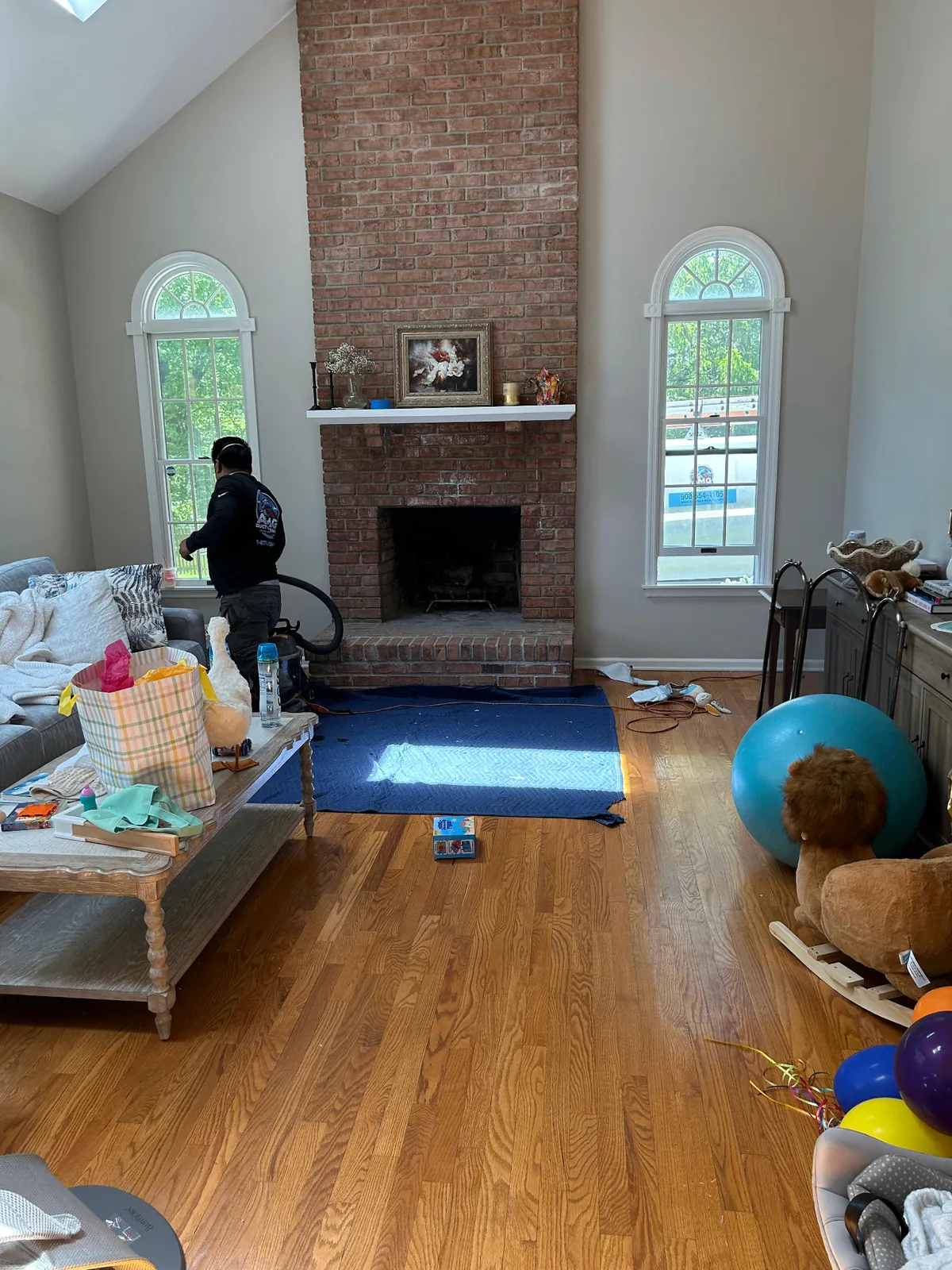
A visit starts with Chimney Cleaning to clear the flue of old debris, insulation or nesting material left behind when the fireplace was sealed, followed by a camera run from the firebox to the cap to document the liner material, the smoke chamber, the damper and the hearth. Any crack, gap or prior appliance connection found along the way gets noted, and if Chimney Repair is called for, that scope gets written out separately from the cleaning so a homeowner can see what each part covers. That full picture, not a glance at the firebox from the living room, goes on the written estimate before the first fire of the season gets lit.