A lot of basements in this part of New Jersey vent the dryer out through a window instead of through the rim joist or foundation wall. The setup is familiar: the original window glass gets swapped for a thin plastic or glass insert with a hole cut for a flexible duct, a louvered cap sits on the outside face, and the dryer hose runs from the back of the machine, across the basement ceiling or along the floor, up to that insert. It worked as a quick fix when the house was remodeled or the laundry moved downstairs, and it can keep working for years, but the insert, the hose and the low point where they meet are three separate places for the setup to fail.
Why the window insert cracks and loosens
The insert itself is the weak point first. It sits exposed to outdoor temperature swings through every New Jersey winter and summer, and the plastic or thin glass panel expands and contracts with each cycle. Caulk around the edges dries out and pulls away, the frame can warp slightly, and a crack that starts as a hairline eventually lets air, insects and sometimes mice into the gap around the duct. Once that seal opens, cold air drops into the basement through the hole in winter, and warm, humid air seeps back in through the same gap during summer, while the louvered flap outside does less and less to hold anything back.
What a sagging hose and a low point cause
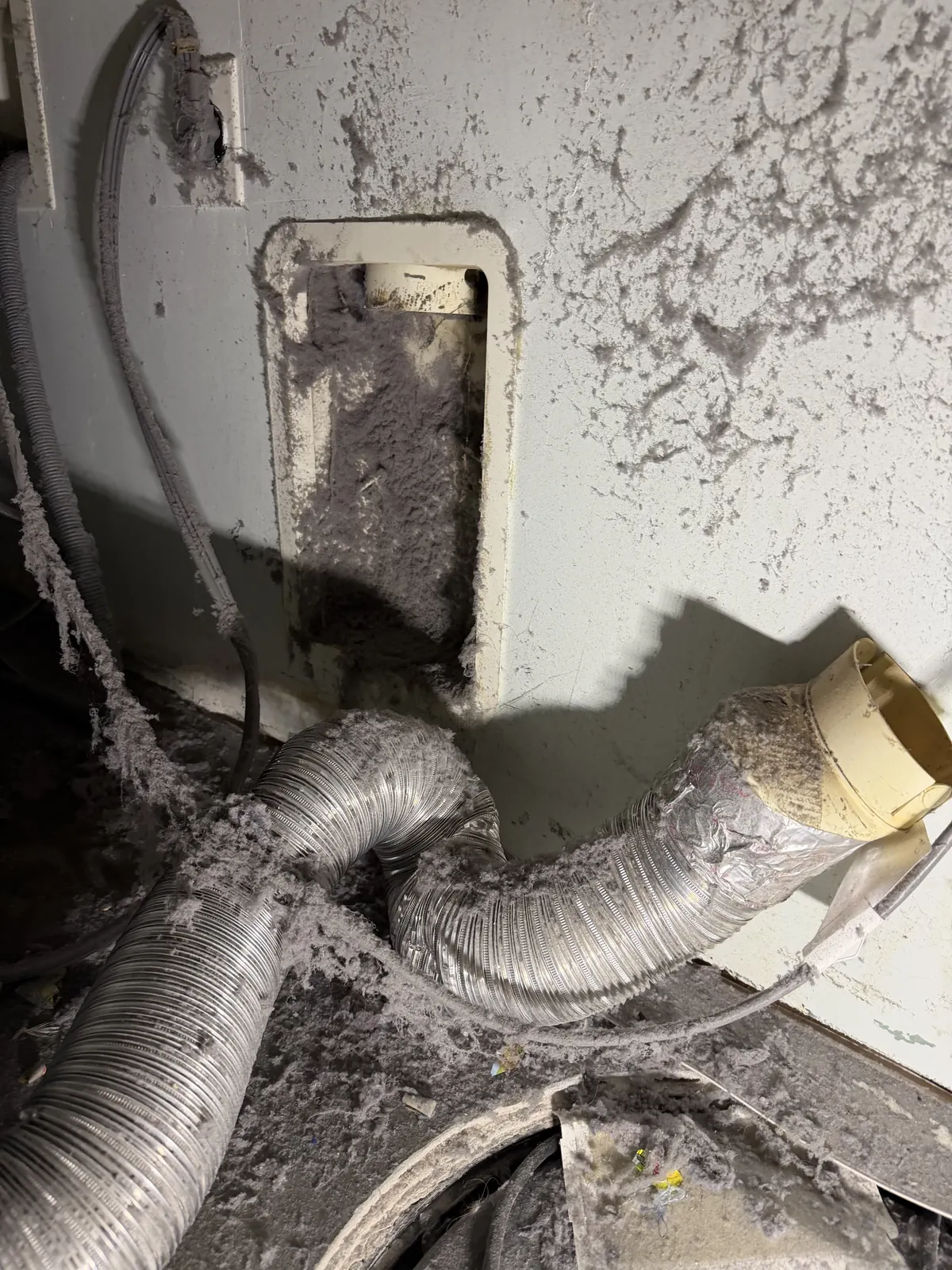
A flexible duct that runs mostly horizontal from the back of the dryer up to a window well almost always picks up a low spot somewhere along the way, whether it dips behind the machine or sags where it was never pulled tight after the last service call. Lint settles at that low point first, since it is the one place in the run where moving air slows down the most, and it builds there instead of riding the airflow out through the vent. A duct partly blocked by that lint takes longer to clear the moist air a load of laundry produces, which shows up as longer drying times, a warm and slightly damp smell in the basement after a cycle, and a hose that feels noticeably heavier than it used to.
Prewar basements in Bound Brook and South Bound Brook
This setup shows up often in the prewar housing stock around Bound Brook and South Bound Brook, where Census estimates put roughly a quarter of homes as built before 1940. Many of those basements sit close to grade, with short windows near the sill and a foundation of stone or block that does not leave a straight, easy path for a vent to pass through the rim joist. When the dryer moved down to the basement decades after the house was built, running the vent out through the window opening was often the only route that did not mean cutting new openings through a load-bearing wall, and the fix stuck even after other utility work modernized the rest of the basement around it.
What a proper wall or rim joist termination looks like
A termination that holds up starts with a short, mostly straight run of rigid metal duct instead of a long flexible hose, since rigid duct does not sag and gives lint far less surface to catch on along the way. The duct passes through the rim joist or the foundation wall at the shortest practical distance from the dryer, rather than traveling the length of the basement to reach a window opening. Outside, the run ends in a hood fitted with a backdraft damper that opens only while the dryer is running and closes the rest of the time, which keeps outside air, insects and weather out of the duct between loads far better than a window insert's louvered flap ever does.
Moving the vent: what the job involves
Moving a vent out of a window and into the rim joist is Dryer Vent Installation work. It starts with removing the old insert and closing the window opening properly, whether that means restoring the original glass or framing in a permanent panel, so the window stops carrying a vent it was never built to hold. A new opening gets cut through the rim joist at a point that lines up with a short, direct duct run, the rigid metal duct gets set with a slight pitch toward the outside so condensation drains out rather than pooling in the basement, and the exterior hood gets sealed tight against the siding or foundation. If the existing hose has years of packed lint sitting at its low point, Dryer Vent Cleaning on the old run before it comes out keeps that material from scattering through the basement during the swap.
What a visit looks like
A visit starts with a look at the current run from the dryer to the window, checking the insert's seal, the hose's pitch and where lint has settled along the way, along with a look at the rim joist to find the shortest path to the outside. That assessment, together with the choice between a wall or rim joist termination and the condition of the window opening once the insert comes out, goes on the written estimate before anything gets cut. In a two-family home in Bound Brook or South Bound Brook where more than one dryer might vent through the same basement, each run gets checked and routed on its own, rather than assuming one fix covers both lines.