Around North Plainfield and Bound Brook, Census estimates put more than one home in four at built before 1940, and a fair share of those attics still carry loose fill insulation that people in the area call vermiculite, or, when the old bag survived, Zonolite. The question of whether an attic duct system buried in that material can be cleaned splits into two answers. Registers, return grilles, the air handler and any trunk in the basement are open for Air Duct Cleaning right away. The sections that run through the attic insulation itself wait, because that material has to be treated as if it contains asbestos until a professional says otherwise, and running hoses, brushes or a person through it is exactly the kind of disturbance that guidance warns against.
What vermiculite insulation is, and why it gets treated with care
Vermiculite is a mineral that was expanded into small, pebble-like pieces and poured loose between attic joists as insulation for much of the last century. One mine, near Libby, Montana, supplied more than seven in ten of the vermiculite sold across the country between 1919 and 1990, much of it under the Zonolite brand, and that ore carried naturally occurring asbestos fibers mixed in. The EPA's guidance for homeowners is direct about it: treat vermiculite attic insulation as if it contains asbestos, leave it undisturbed, keep storage and foot traffic out of an attic that holds it, and bring in a professional asbestos contractor before any remodeling project disturbs it. A duct crew is not that contractor, and it does not test the material or remove it.
What can be cleaned inside the house right now
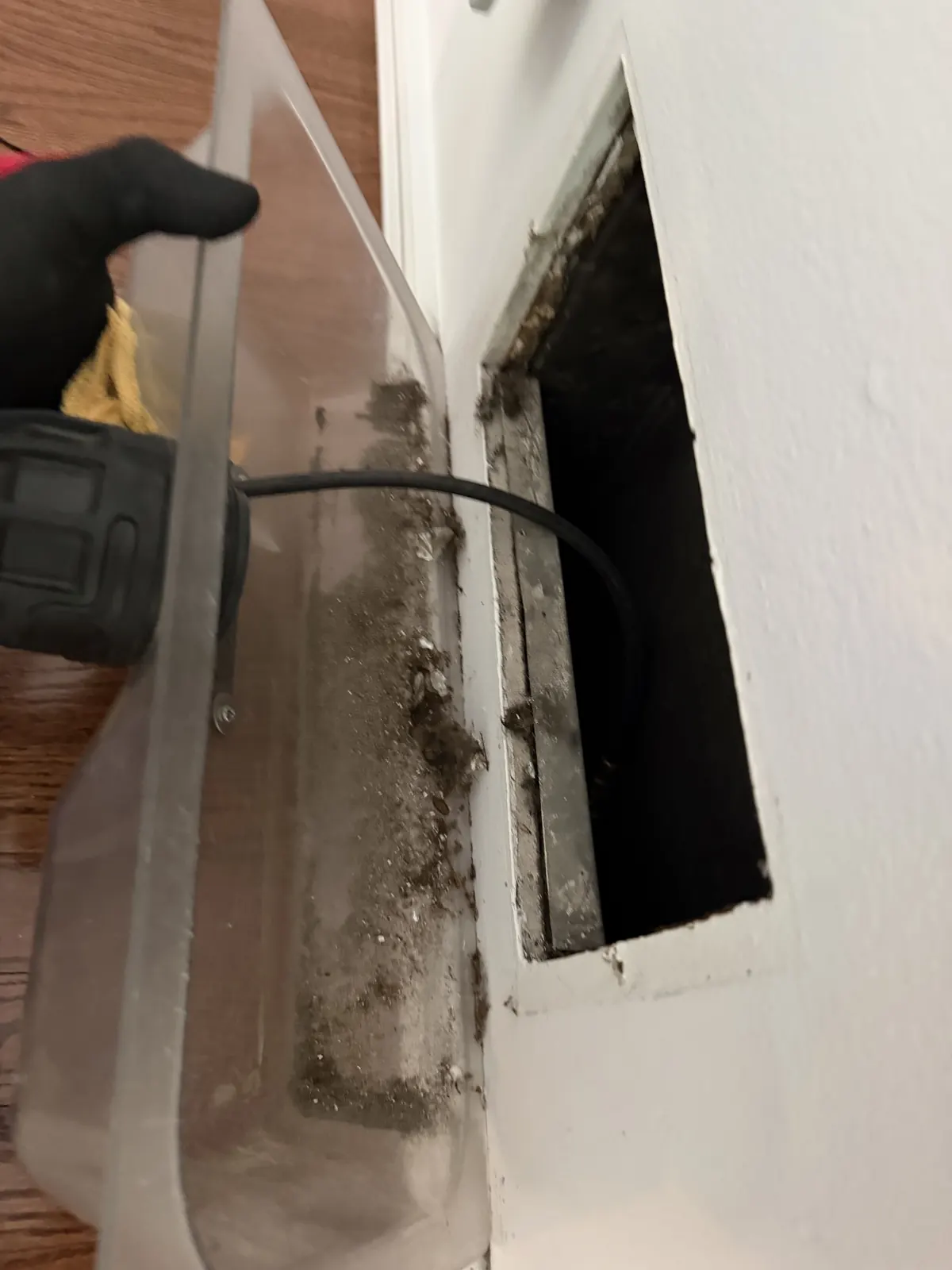
Air Duct Cleaning covers everything on the house side of the attic access panel: supply registers and return grilles in every room, the trunk line in the basement or crawlspace, the plenum, the coil area and the blower compartment of the air handler or furnace. None of that touches the vermiculite, and cleaning it does not wait on any attic decision. If the ductwork inside the living space also has a joint that needs resealing or a section that got crushed, that is Air Duct Repair, and it can happen on the same visit as the cleaning.
Why the attic runs wait on someone else first
The problem is not the duct metal itself, it is what surrounds it. A brush or a hose dragged through a joist bay full of loose vermiculite disturbs the fill, and disturbance is the one thing the EPA's guidance tells owners to avoid until a professional asbestos contractor has looked at the material. A technician working in that attic to vacuum a supply run, reconnect a boot, or crawl along a trunk line to check for leaks would be doing exactly that kind of disturbing work. Until a licensed asbestos contractor has tested the insulation or worked out a plan to manage it, the attic sections stay marked and untouched, and the crew works around them from the rooms below.
The return duct crossing that attic comes first
In a lot of these older homes, the return duct is the one run that has to cross the attic to reach a central return grille, and it is often the leakiest section in the house, since it sits where nobody sees it and rarely gets checked. A gap at a joint, a disconnected boot or a seam that opened years back pulls attic air, and anything loose in it, down into the house every time the blower starts. That is the detail worth putting in front of the asbestos contractor before any other attic work begins, since a return that draws through vermiculite fill is a bigger question than one buried supply run with a good seal. Once that contractor has cleared or managed the insulation, replacing a bad section of that return is Air Duct Installation work, done from the attic side once the area has been addressed.
What a visit around a vermiculite attic looks like
Before scheduling, we ask what year the house was built and if the attic has loose, granular insulation instead of batts or blown fiberglass. If nobody is sure, we ask the homeowner not to climb up and check, since a quick look with a flashlight is itself a disturbance the EPA's guidance tries to prevent. The visit covers the house-side ductwork, and any attic run that appears to pass through or under vermiculite gets noted on the written estimate as work that waits on an asbestos contractor's assessment, rather than something we open on our own. AMG does not test for or remove asbestos, and no duct crew should try to make that call in someone's attic.
Getting the order right before the furnace runs hard
The order that works is the asbestos contractor first, then the attic duct work, with the house-side Air Duct Cleaning able to happen on its own schedule in between. Some homes have additions or updated attics from later decades and nothing to worry about, and some older homes have vermiculite that has sat undisturbed for years without incident, which the EPA's own guidance treats as the safer condition compared with insulation that gets stirred up. Leaving it alone until it needs to be touched, and bringing in the right contractor when it does, keeps the sequence in order for both the insulation and the ducts underneath it.