Chimney Damper Repair in Bridgewater, NJ
Chimney damper repair gets a seized, rusted or leaky fireplace damper working again, or swaps its job to a top-sealing damper at the top of the flue. AMG Duct Cleaning Bridgewater does this work on fireplaces in Bridgewater and the towns around it, where a damper tends to fail after years of light use rather than heavy use.
Fireplaces around Bridgewater mostly lead quiet lives. A first-wave house in Martinsville or Watchung may see a dozen fires a winter, and a Victorian in North Plainfield might go years without one. That is hard on a damper. A metal plate that rarely moves sits in the dark, takes whatever moisture comes down the flue, and rusts in place, so the day someone decides to light a fire is the day they discover the handle will not turn.
This page takes the questions in the order they come up: why the damper will not move, how safe it is to burn with a stuck one, whether to repair it or add a top-sealing damper, why a closed fireplace still smells or feels drafty, and how gas logs and factory-built fireplaces change the picture. Most damper trouble turns up during a chimney cleaning, when the plate is tested so it opens fully.
Why won't our damper open or close?
The usual reason is rust at the pivots or in the frame, caused by water coming down the flue. Rain falling past a missing cap lands on the plate, and water through a cracked crown runs down inside the chimney to the same place. After enough wet seasons the plate and frame act like one piece of metal. On a fireplace that sees few fires, the rust never gets burned off or worked loose, so it builds up unnoticed.
Other causes are mechanical. The handle or the rod can break or slip out of its bracket, so the lever moves freely and nothing happens above. A hard fire can warp a thin plate until it binds in the frame. On a fireplace that does get used, creosote can stick the edges down. Now and then, something has fallen onto the plate from above: mortar, tile or a nest. A flashlight and a mirror held in the firebox will often show which one you have, with the fireplace cold.
Is it safe to light a fire if the damper is partly stuck?
No, because a plate that will not open fully can send smoke and carbon monoxide back into the room. Fires need the full opening, especially while the flue is cold. A plate stuck at a slant also leaves you unable to tell how much of the flue is free, and it can drop further once the metal heats up. If a fire is already going and smoke starts to roll out, open a window, keep the room clear and let it burn down without adding wood.
A damper stuck fully open is less urgent but costs you all winter, because heated air climbs out through the flue day and night and cold air slides in beside it. Do not force a seized handle. Rust often holds the plate better than the rod or bracket do, and a broken rod makes the repair larger. Gas logs raise a separate issue, covered below.
Should we fix the throat damper or add a top-sealing damper?
Fix the throat damper if the plate and frame are sound and only the movement has failed, and add a top-sealing damper if the metal is gone or the plate never sealed well. Freeing the pivots, clearing the frame and replacing a handle usually gets a solid damper moving again. It stays what it always was, though: metal resting on metal with gaps at the edges, which leaks a little.
A top-sealing damper mounts at the top of the flue and closes with a gasket, worked by a cable that runs down the flue to a bracket in the firebox. New Jersey's code asks that a damper be in the fireplace or the chimney venting it, and that it can be operated from the room, so this arrangement fits the rule. It suits a Victorian with a rusted-out plate, and any fireplace where the frame cannot be reached without opening masonry. It needs sound tile at the top and one fireplace flue to itself, and a heating flue next to it still has to stay covered by a separate cap. A chimney with a damaged top goes through chimney crown repair first.
Why does a closed fireplace still smell or feel drafty?
A closed throat damper still lets air move, so odors and cold air pass through the gaps around the plate. In summer, humid air stirs up the smell of creosote in the flue, and when bath fans, a dryer or a range hood pull air out of the house, the replacement air can come down the chimney and carry the smell with it. A sweep removes most of the source. Sealing the flue better, at the throat or at the top, stops the movement that brings it into the room.
Winter brings the opposite complaint. On the Watchung ridges and on open lots in Warren and Bernards, wind can make a loose damper rattle and pushes cold air into the room. The chimney itself is a cold column of brick on an outside wall, so air inside it sinks. A damper at the top of the flue keeps warm room air in the chamber and blocks the cold air where it starts, and homeowners usually notice the difference at the hearth first.
How do gas logs and factory-built fireplaces change damper work?
Gas logs need the damper fixed open to the amount the log maker specifies, so a plate that closes freely has to be clamped or blocked before the set is used. The instructions that come with vented logs give a minimum permanent opening, since exhaust from the burner has to leave even when no one remembers the handle. If the old plate has rusted at an odd angle, it may need work before the log set can be installed as written.
A factory-built fireplace is a different animal. Its damper is part of the listed unit, often a thin blade worked by a small handle at the top of the firebox, and replacement parts have to match the maker's label. In the 1980s and 1990s houses of Bridgewater, Warren and The Hills, the fix is often a pivot or a handle. An aftermarket top damper should go on such a chimney only if the maker's listing allows it, so check that before ordering anything.
What happens on a damper repair visit?
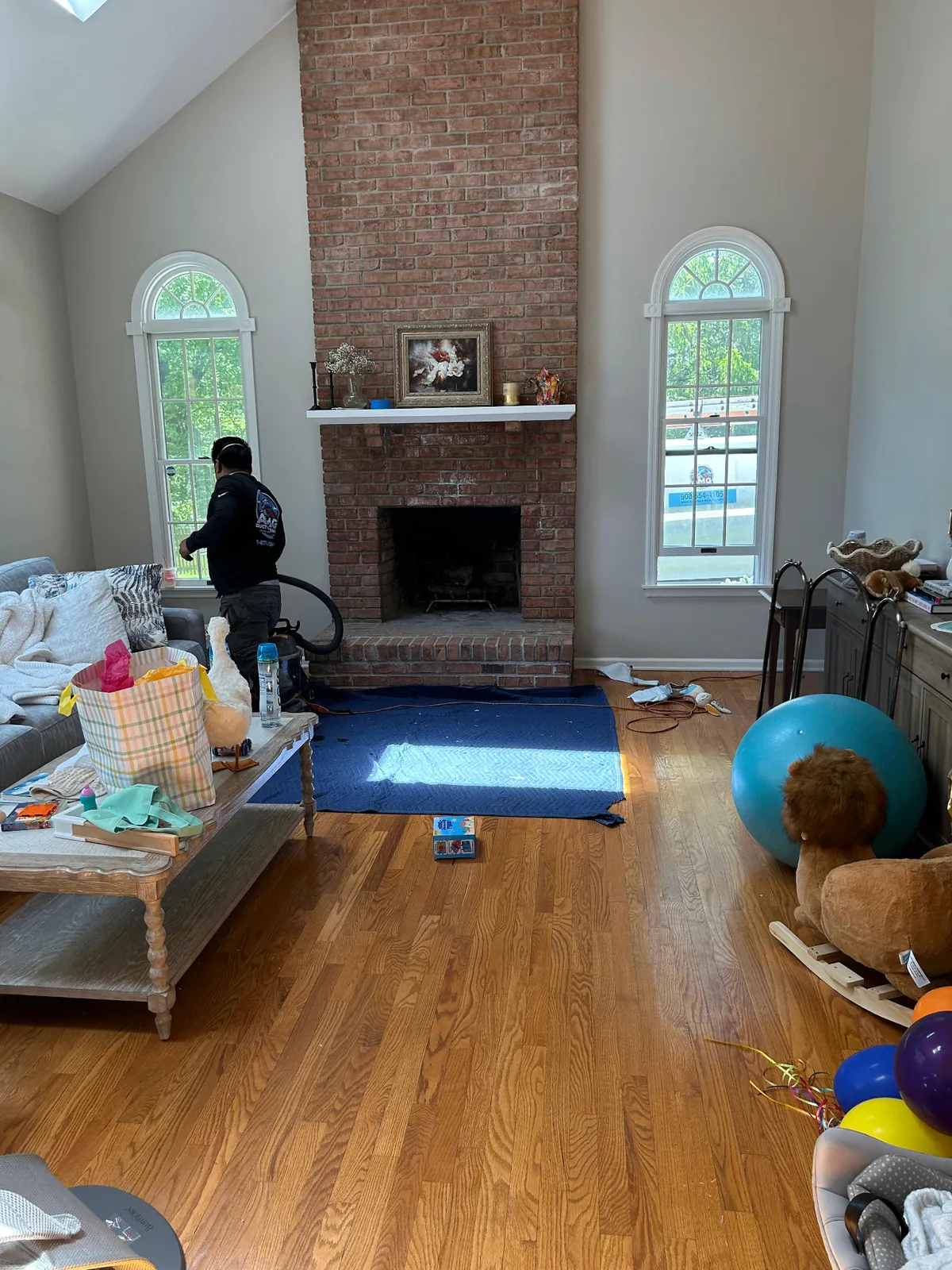
The visit starts by working out why the damper failed, because a repaired plate under a leaking cap will seize again. The room is protected first, with drop cloths on the hearth and a vacuum at the firebox. The plate is cleaned and tested through its full travel, and the top of the chimney is checked where the roof can be walked safely. You get photographs and a clear account of what can be saved.
Each item on the estimate stands alone, and the estimate costs nothing. AMG is veteran owned, licensed and insured (NJ HIC 13VH13654300), and answers damper calls 8 AM to 8 PM, 7 days a week. Often the same inspection turns up work next door, in which case smoke chamber repair and the damper can be scheduled together.
What is included
- Damper tested through its full travel, cold
- Plate, pivots, rod and handle checked one by one
- Rust, creosote and fallen debris cleared from the frame
- Worn handles and rods replaced
- Top-sealing damper fitted where the plate cannot be saved
- Log set stop checked on gas log fireplaces
- Maker's label read before any factory-built part is replaced
- Cap and crown checked for the water behind the rust
Questions and answers
The damper handle spins but nothing happens. What broke?
Usually the rod or the linkage has slipped or snapped, and the plate above has stayed where it was. It is often a small repair. Keep the fireplace cold until someone confirms whether the plate is open or closed.
Can the damper be left open all the time?
On a working fireplace, it can, but you lose heated air up the flue. Close it once the fire is fully out and the ashes are cold. With gas logs the rule is different, and the damper stays fixed open as the instructions direct.
How much does damper repair cost around Bridgewater?
It depends on whether the plate can be saved. A loose pivot or a new handle is minor work, while a new top-sealing damper adds a trip up the roof and a part sized to the flue. The estimate is free.
Does a top-sealing damper work on a chimney with a heavy creosote coat?
The flue should be swept first, since the damper has to seal against clean tile. A sweep before the installation also gives a chance to look at the liner, and the seal lasts longer on a clean surface.
We don't use the fireplace at all. Does the damper matter?
Yes, if the flue is open to the house. A sound damper or a sealed flue keeps cold air and summer odors out of the room, and a damper that has rusted through is one more sign that water is getting in up top.
More questions and answers about our work
Chimney Damper Repair across the Bridgewater area
We provide chimney damper repair in the Bridgewater area. Choose your town for local details.
Ready for cleaner air?
Tell us about your home and get a free estimate.